Development
Nature vs nurture: what genes and experience each add, and how they combine
 Yusuf DemirciContent Writer at Psychology World
Published 25 Nov 2026 · 12 min read
On this page
Please note
Psychology World is an educational reference, not diagnosis or treatment. If you need help, talk to a doctor or a qualified professional.
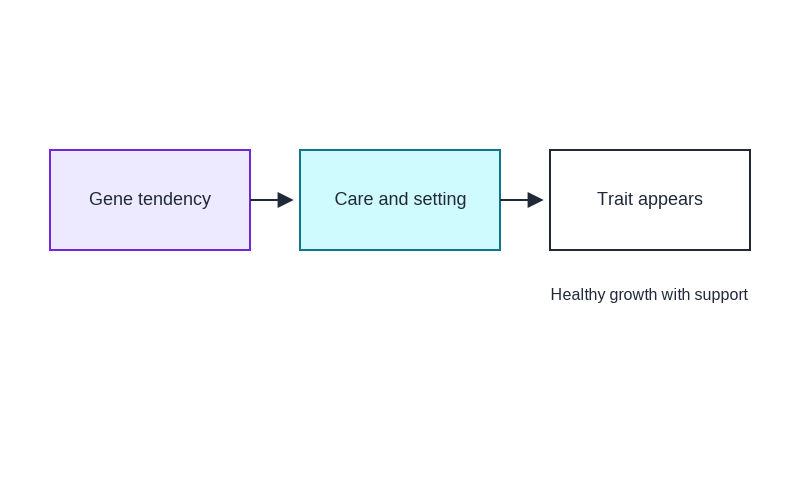
Nature and nurture both shape who you become. Genes set tendencies for how you learn, feel and act. Experience decides how those tendencies show in daily life. Modern research treats the two as partners, not rivals.
Twin work gives the clearest numbers. Identical twins reared apart stay alike in IQ and personality. A fifty-year pool of twin studies puts average heritability near half of group differences. Yet a high heritability never means fate. Diet, care, teaching and daily habits still change outcomes.
- Nature means inborn tendencies linked to genes and brain growth.
- Nurture means experience after conception, from care and teaching to culture and nutrition.
- Twin studies separate the two by comparing people with shared genes and different homes.
- Heritability describes group differences, not how much of one person comes from genes.
- Genes and environment combine through interaction, not addition.
- You can keep the terms straight by looking them up, saving them and drilling them.
Keep the terms from this post
Look them up in Psychology World, save them to a list and study them.

What does nature mean in psychology
Nature means the part of you that starts with biology. It covers genes, brain growth and temperament. A child arrives with tendencies for activity level, mood and pace of learning. These tendencies do not fix a life path. They set a starting range.
Early writers used strong images for this side. One camp spoke of instincts that unfold with growth. Puberty shows the logic in plain form. The body changes on a timetable that teaching does not set.
Language also shows a natural base. Most children learn any spoken language around them without formal lessons, as long as they hear it early and often. You can read how children build knowledge from experience in how assimilation and accommodation work.
The modern term for the natural side is genetic influence. It does not mean one gene for one trait. Most mind traits reflect many genes with small effects. The article keeps this meaning through every section, so nature always means inborn tendency, never fate. Historians trace the phrase nature and nurture to Francis Galton, who made it a scientific opposition in the 1870s and 1880s, according to Simply Psychology.
What does nurture mean in psychology
Nurture means every influence that reaches you after conception. It covers care, teaching, peers, culture, nutrition, stress and daily habits. A calm home, good school and rich language feed growth. Harsh stress, poor nutrition and isolation slow it.
Early writers used a strong image here too. John Locke wrote of the mind as a blank slate that experience fills, as summarised in the encyclopedia overview. Behavior research then showed how fast learning shapes action. A child who sees kindness copied and praised repeats it. A child who practices reading with care reads better.
Nurture also covers chance biology that is not genetic. Illness in pregnancy, birth problems and accidents change growth without changing DNA. Social life matters as well. Early bonds shape later trust, as you can see in how attachment styles form. Culture sets which acts earn praise and which earn blame. The article keeps this broad meaning, so nurture always means experience plus setting, not only parenting.
Why the either-or view ended
For decades the field asked which side wins. Nativists said genes rule. Empiricists said experience rules. The data broke the tie. Both matter in every trait studied so far.
Three facts closed the debate. First, identical twins reared apart stay alike, yet never fully alike. Genes pull them together, different homes pull them apart. Second, heritability sits near half on average across traits, leaving half to other causes. Third, environments change even highly heritable traits. Better food, schooling and health lift scores across generations.
Donald Hebb put it as a rectangle, as summarised in the encyclopedia overview. Length and width both make its area. Asking which matters more misses how they work together. The useful question now asks how much each adds in a given group, and through which path. The rest of this article follows that question step by step.
What twin and adoption studies show
Twin and adoption designs separate genes from home life. Identical twins share all genes. Fraternal twins share about half. When identical twins resemble each other more than fraternal twins do, genes play a role. When adopted children resemble birth parents more than adoptive parents, genes play a role. When they resemble the home they grow in, experience plays a role.
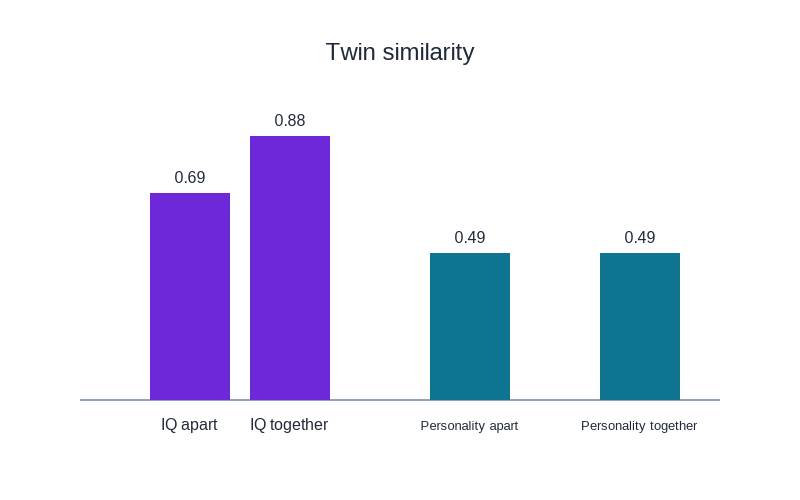
The Minnesota Study of Twins Reared Apart tested identical twins separated early in life. Full-scale IQ correlated 0.69 in reared-apart identical pairs and 0.88 in pairs raised together. Personality correlated 0.49 in both groups, as reported in the Simply Psychology synthesis. In plain words, genes matter a lot for IQ and personality, yet home life still moves IQ.
Adoption work points the same way. Adopted children resemble birth parents in IQ and temperament more than chance allows. They also respond to the adoptive home. Warm, steady care lifts mood and control. Harsh, chaotic care lowers them. Genes and home life add together, and they also shape each other.
| View | Claim | What research shows |
|---|---|---|
| Nature only | Genes fix traits | Twins show strong genes effects, but never full sameness |
| Nurture only | Experience writes all | Homes shape traits, but birth parents still predict child scores |
| Interaction | Genes and setting combine | Data fit this view across traits and ages |
A fifty-year pool of nearly all twin studies confirms the middle path. Across 17,804 traits from 2,748 papers with 14.5 million twin pairs, average reported heritability is 49 percent, according to the Nature Genetics meta-analysis. Most traits fit a simple additive genes model, with little room for shared home alone. The number describes groups, not persons, as the next section explains.
Keep the terms from this post
Look them up in Psychology World, save them to a list and study them.
What heritability does and does not mean
Heritability is the share of differences between people in a studied group that links to gene differences. A value of 50 percent means half the spread in that group tracks genes. It does not mean half of your traits come from genes. It does not rank groups. It does not stay fixed across time and place.
Three errors keep returning. The first reads 50 percent as personal fate. A trait can show 80 percent heritability in one group and still change a lot with better teaching. The second compares groups. Heritability within groups says nothing about causes of gaps between groups, since settings differ.
The third treats the number as a constant. Heritability of IQ rises with age, from about 20 percent in infancy to 60 to 80 percent in later adulthood, as summarised in the Simply Psychology synthesis. People choose settings that fit tendencies, which raises the genes share over time.
Twin samples also carry limits. Many separated pairs shared the womb and some early contact. Agencies often placed them in similar homes. Volunteers answered media appeals, so the sample was not random.
These facts likely raise the genes estimate. The direction stays clear, but the exact number moves with method and sample. As of 2026, treat any single percent as tied to its study, not as a law.
How genes and environment combine
Genes and setting meet through three paths. The first is direct need. Some gene variants demand a matching diet or drug. Phenylketonuria shows the logic.
Affected babies lack an enzyme that breaks down phenylalanine. Without care, severe disability follows. A blood test finds the genes at birth, and a low-phenylalanine diet prevents the disease from developing, as described in the Simply Psychology synthesis. Genes set the risk, care blocks the outcome.
The second path is trigger. A person may carry higher risk for low mood, yet stay well without heavy stress. Long stress, loss or trauma can then bring the episode. This diathesis-stress model needs both parts. Neither genes alone nor stress alone tells the full story. The model guides care without blaming the person.
The third path is control of gene use. Experience can mark genes up or down without changing DNA letters. Rat work shows the mechanism.
Pups that received rich licking and grooming grew calmer stress systems than pups that received little care. The difference tracked methylation at a stress-gene switch in the brain, as summarised in the Simply Psychology synthesis. Cross-fostering flipped the outcome, so care caused the mark, not birth alone. Human work is less direct, and memories do not pass down. The lesson is narrower and still strong. Early care tunes stress biology.
A human-scale proof comes from generations. Average IQ scores rose across the twentieth century even though genes change slowly. Better nutrition, schooling and health explain much of the lift. You can see the pattern in the steady rise in IQ scores across generations.
Mouse work adds a direct image. Light exposure switched on 611 genes across all cell types in visual cortex, as reported by Harvard Medical School. Sense data reached the genes within hours. Nature and nurture met in the same tissue.
Examples in development
Language shows both sides in one skill. Babies favor speech sounds from birth and learn any tongue they hear. That readiness is nature. Vocabulary size, accent and reading skill track teaching and books. That growth is nurture. How assimilation and accommodation work explains the learning half in plain steps.
Personality shows the same mix. Twin work links temperament and traits to genes. Parenting, peers and culture shape how traits show at school and work. A lively child in a strict class looks restless. The same child in a sport group looks engaged. For the five main traits, see how the Big Five traits describe personality.
Intelligence splits into parts that age in different ways. Speed and novel problem solving peak early. Knowledge and skill with words hold longer. Genes influence both, yet schooling and practice move scores. For the split, see how fluid and crystallized abilities differ.
Piaget stages add growth order. Children pass broad steps in similar order, but teaching and culture move the pace. For the steps and later fixes, see Piaget stages and the ages research moved.
Mental health needs both lenses. Genes shift risk for low mood and worry. Stress, loss, illness and poor sleep can trigger episodes in those at risk. No single gene explains a disorder. Care, sleep, work and close bonds protect even high-risk people. If low mood lasts weeks, disrupts work or brings harm thoughts, talk to a doctor or a qualified professional promptly.
Three mistakes to avoid
First, do not read heritability as fate. A 50 percent value leaves half the spread to other causes. It also hides interaction. Two people with the same gene variant can end in different places when their settings differ. Ask which setting changes the odds, not which side wins.
Second, do not turn a study average into personal advice. Twin numbers describe groups of volunteers in certain places and years. Your family, school and town differ. Use the findings as direction, not as a prediction for one child. Good care and teaching help across gene backgrounds.
Third, do not trust single-gene stories. Early reports tied one mood-gene variant to depression after stress. Larger later tests with hundreds of thousands of people found no reliable link. The wider idea of genes plus stress still stands on other evidence. Drop the single-gene tale and keep the interaction model. The best-known short-allele finding did not hold in the largest tests, so this article does not present it as fact.
How to remember these terms
Students meet many paired terms at once. Nature, nurture, heritability, epigenetics and interaction blur fast. The fix is small and steady. Look up one term, say its meaning in your own words, save it to a short list and test yourself a day later.
Psychology World holds 23,944 psychology terms for iPhone and iPad. Look up a term such as heritability, save it to a list, and drill the list with Flashcard, Question and Typing. Search inside definitions and study progress are Pro features. The word of the day brings one term each day at a time you choose, and it stays off until you turn it on.
Use the links above as next steps. Open the Flynn rise when you study intelligence. Open the Big Five when you study personality. Open Piaget stages when you study child growth. Each page defines its terms in plain words and links back to related ideas. Short daily rounds beat long rereading.
Keep the terms from this post
Look them up in Psychology World, save them to a list and study them.
Frequently asked questions
What is the difference between nature and nurture in simple terms
Nature means inborn tendencies linked to genes and brain growth. Nurture means experience after conception, from care and teaching to culture and health. Most traits need both, so the simple answer is tendencies plus setting.
What are clear examples of nature vs nurture
Language readiness shows nature, while vocabulary size shows nurture. Temperament shows nature, while manners show nurture. IQ scores show both, since genes predict much of the spread and schooling still lifts results.
Which matters more, genes or environment
Neither wins for all traits. Twin pools put average heritability near half, with wide range by trait and age. Ask how they combine for the trait you study, not which side beats the other.
Is intelligence genetic
Partly. Twin and family work link about half the IQ spread in many groups to genes, more in adults than in infants. Teaching, nutrition and health still move scores a lot, as the generation rise shows.
What is epigenetics in one line
Epigenetics means experience can mark gene switches up or down without changing DNA letters. Rat care work shows the mark clearly. Human proof is weaker, so treat it as tuning, not fate.
Can the environment change genes
It cannot rewrite DNA letters in normal life. It can change how genes are used, which proteins get made and how the brain wires. Diet can even block a genetic disease, as PKU care proves.